

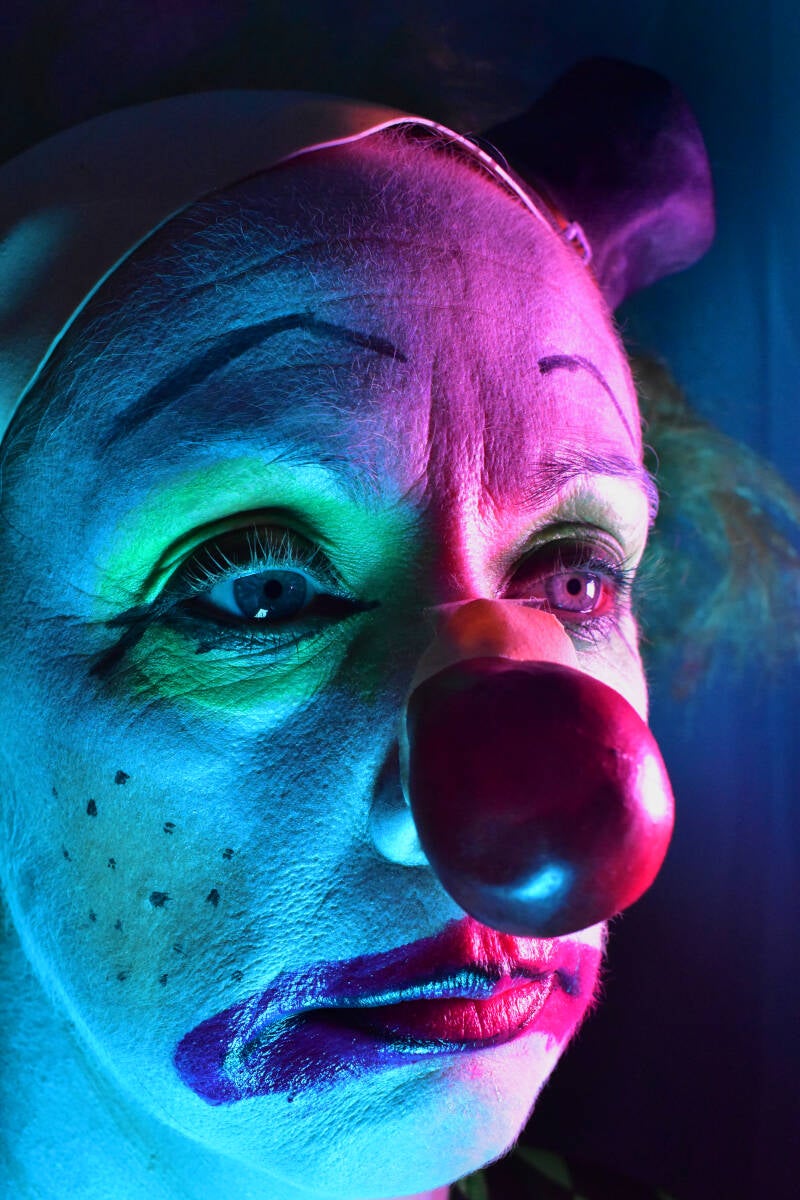
The red nose is traditionally one of the most recognisable symbols of clowning. In these photographs, however, it becomes almost an obstruction.
It sits directly in the centre of the face and draws the viewer’s attention away from the eyes.
The nose can therefore represent distraction—something deliberately ridiculous or entertaining that prevents the audience from looking too closely at what is underneath.
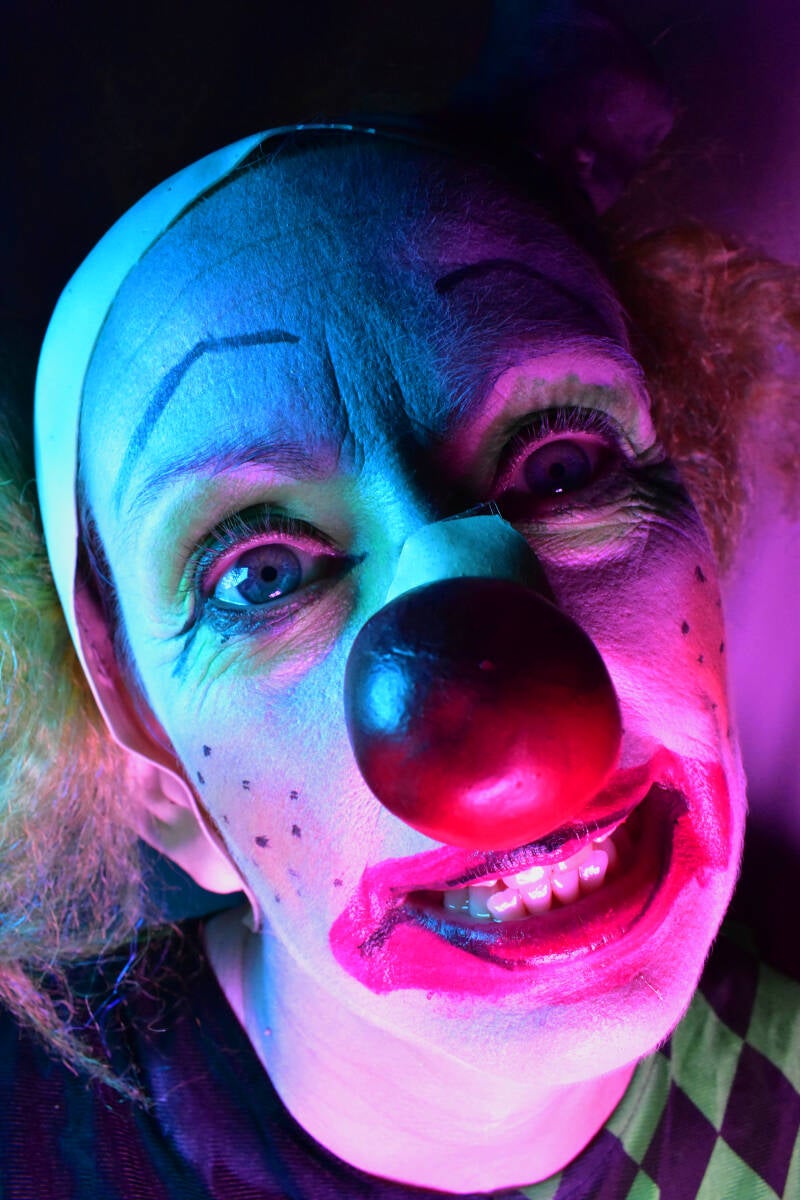
This collection explores the clown as a symbol of performance, identity and hidden emotion. Rather than presenting the clown simply as something humorous or frightening, these photographs examine the contradiction at the heart of the character: a person whose job is to make others laugh, while their own emotions can remain completely hidden.
The intense coloured lighting, exaggerated makeup, red nose, painted smile and theatrical costume create a deliberately artificial world. Everything about the character is heightened—the colours, facial expressions, makeup and emotions—making it difficult to distinguish between what is genuine and what is being performed.
The central idea: “Who is behind the makeup?”
The photographs move between wildly different expressions: some show the clown laughing directly at the camera. Others appear sad, uncomfortable, exhausted or almost vacant. Yet the makeup remains.
The painted smile stays in place regardless of what the expression underneath is communicating. This creates the central tension of the series: A smile does not necessarily mean happiness.
The clown can be interpreted as someone who has learned to perform happiness for other people. The exaggerated smile becomes almost like a mask—a socially acceptable expression that hides everything underneath.

The clown represents performance.
A clown exists to entertain an audience. Their appearance, movements and emotions are exaggerated specifically for other people.
This makes the character a strong metaphor for everyday life.
People often perform versions of themselves depending on who is watching: the happy friend, the confident person, the person who is “fine.”
The clown takes that idea literally. The question becomes: How much of the person we show to other people is actually us?
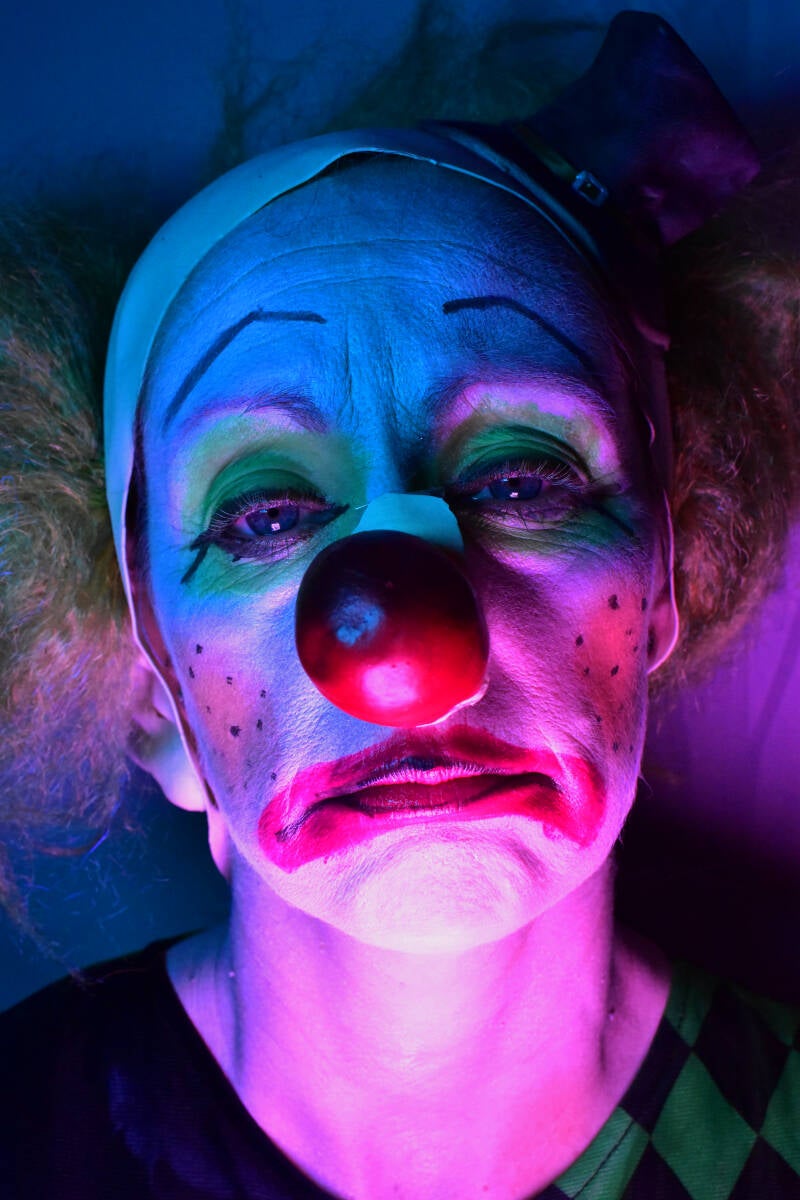
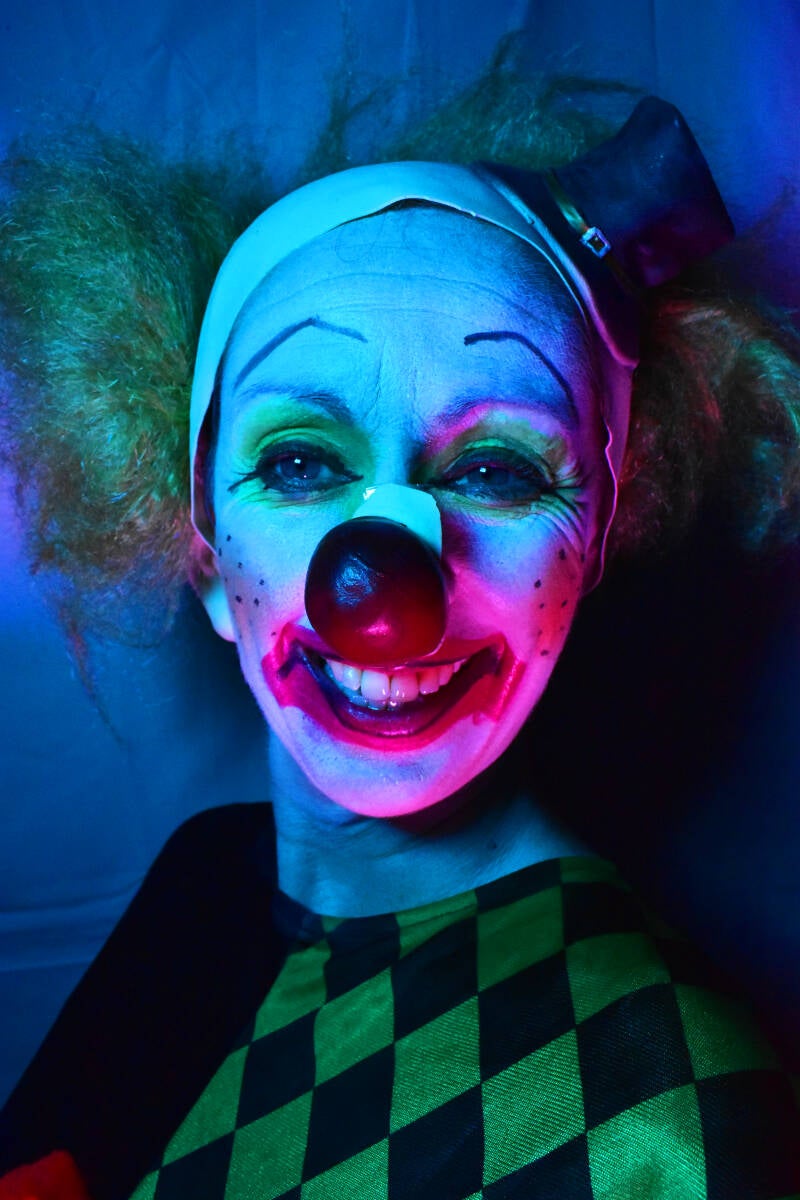
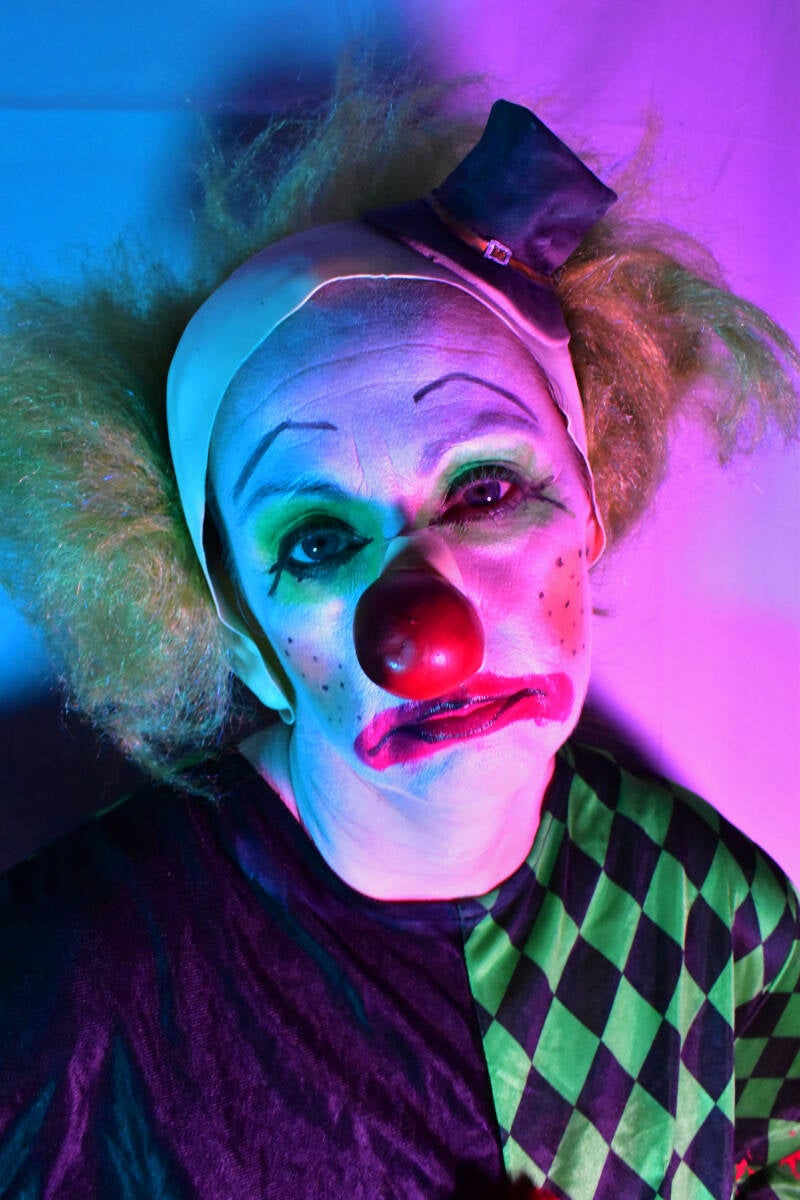
The makeup is deliberately exaggerated rather than realistic.
The blue, red, white and green shapes don’t simply make the subject look like a clown—they obscure the natural face underneath.
The viewer can see the person’s eyes, but the rest of their identity has been transformed.
This creates a separation between: the person underneath, and the character they have created.
The painted mouth is particularly important. In several photographs, the actual expression doesn’t completely match the painted smile.
The makeup says happy, but the eyes sometimes say something else. That contradiction is at the centre of the collection.
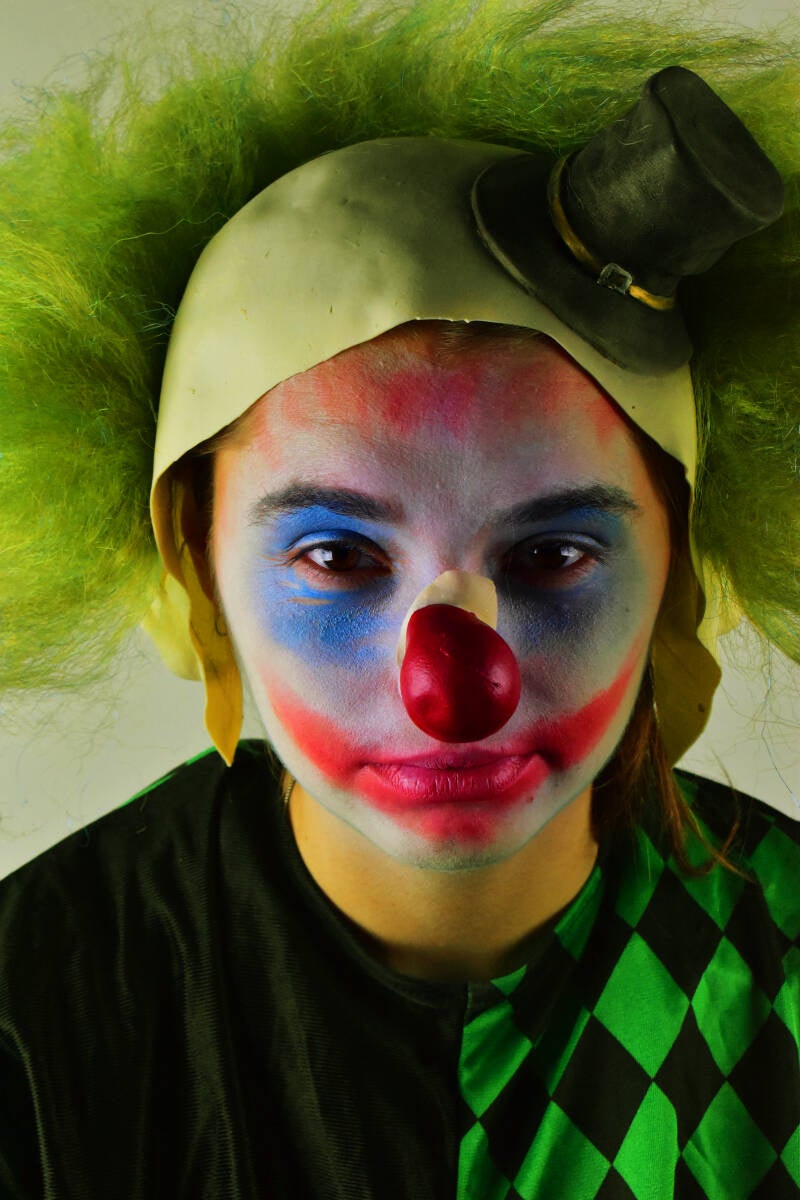
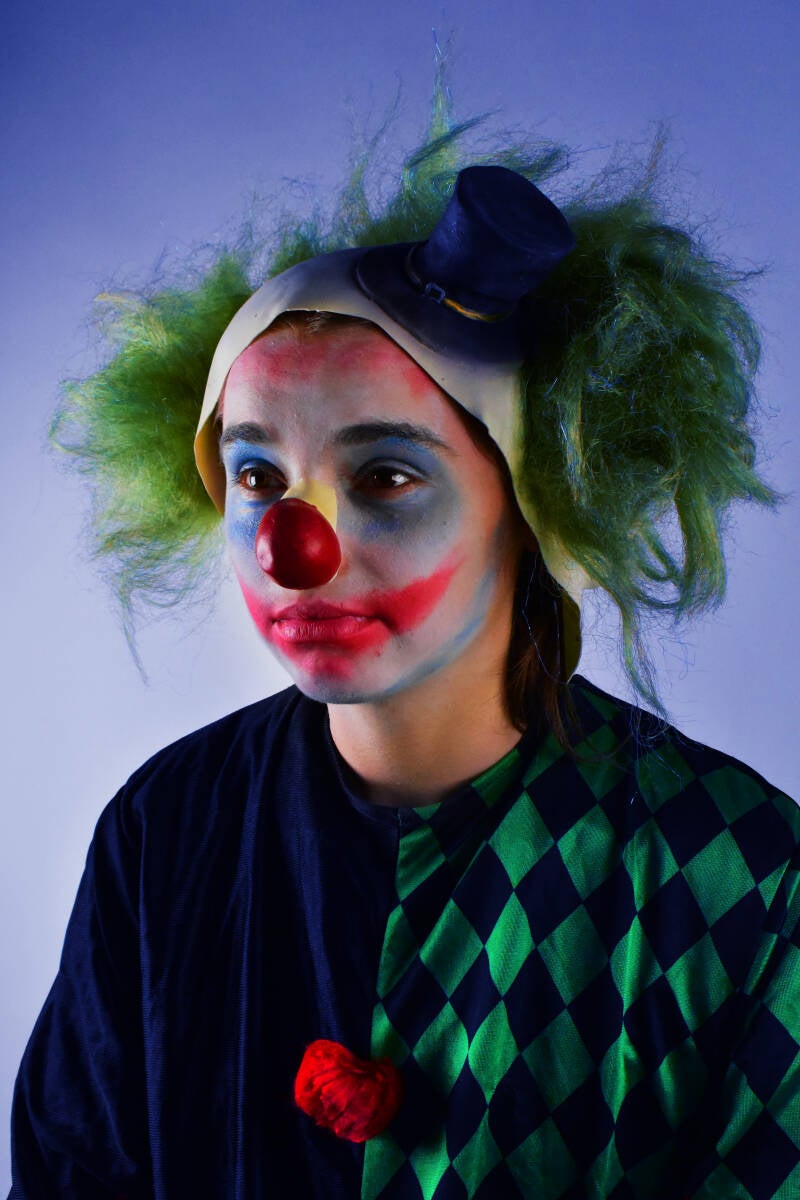
"Behind the painted smile, a heart beats, longing for something more."
-- Clown Girl by Monica Drak
The coloured lighting is essential to the concept. The intense blue, pink, purple and green colours make the images feel artificial and almost dreamlike. They immediately separate the photographs from ordinary portraiture and place the subject within a theatrical environment.
The colours also reflect the exaggerated nature of the clown. Rather than naturalistic lighting, the photographs create a world where everything is heightened.
There is also an interesting contrast between the bright, playful colours and darker emotional undertones.
The photographs look fun. The concept isn’t necessarily fun.That contradiction mirrors the clown itself.

I believe the eyes are arguably the most important element of the portraits.
Unlike the painted features, they cannot be completely controlled.
Across the collection, the subject looks directly into the camera in many images, creating a confrontation between performer and audience.
The viewer becomes the audience. We’re being entertained—but we’re also being watched.
This reverses the normal relationship between a clown and their audience. Instead of simply asking “Isn’t this funny?”, the photographs almost ask: “What do you see when you look at me?”
One of the strongest aspects of the shoot is the progression between expressions.
The clown doesn’t have one personality.
Instead, they seem to be switching between performances.
The laughing images can therefore be interpreted differently depending on the photographs around them. A huge grin can initially look joyful, but after seeing the more melancholy expressions, it can start to feel almost unsettling.
The smile becomes ambiguous. Is it genuine? Is it forced? Is it part of the job? Or has the character forgotten how to take it off?

The green-and-black diamond pattern reinforces the traditional circus aesthetic while also making the subject look almost like a fictional character.
The small hat and colourful costume complete the transformation from person to performer.
The costume therefore isn’t simply there for aesthetics. It reinforces the idea that the subject has entered a role.
Once the costume and makeup are put on, they become the clown.
And that raises another question: Where does the clown end and the person begin?

Add comment
Comments